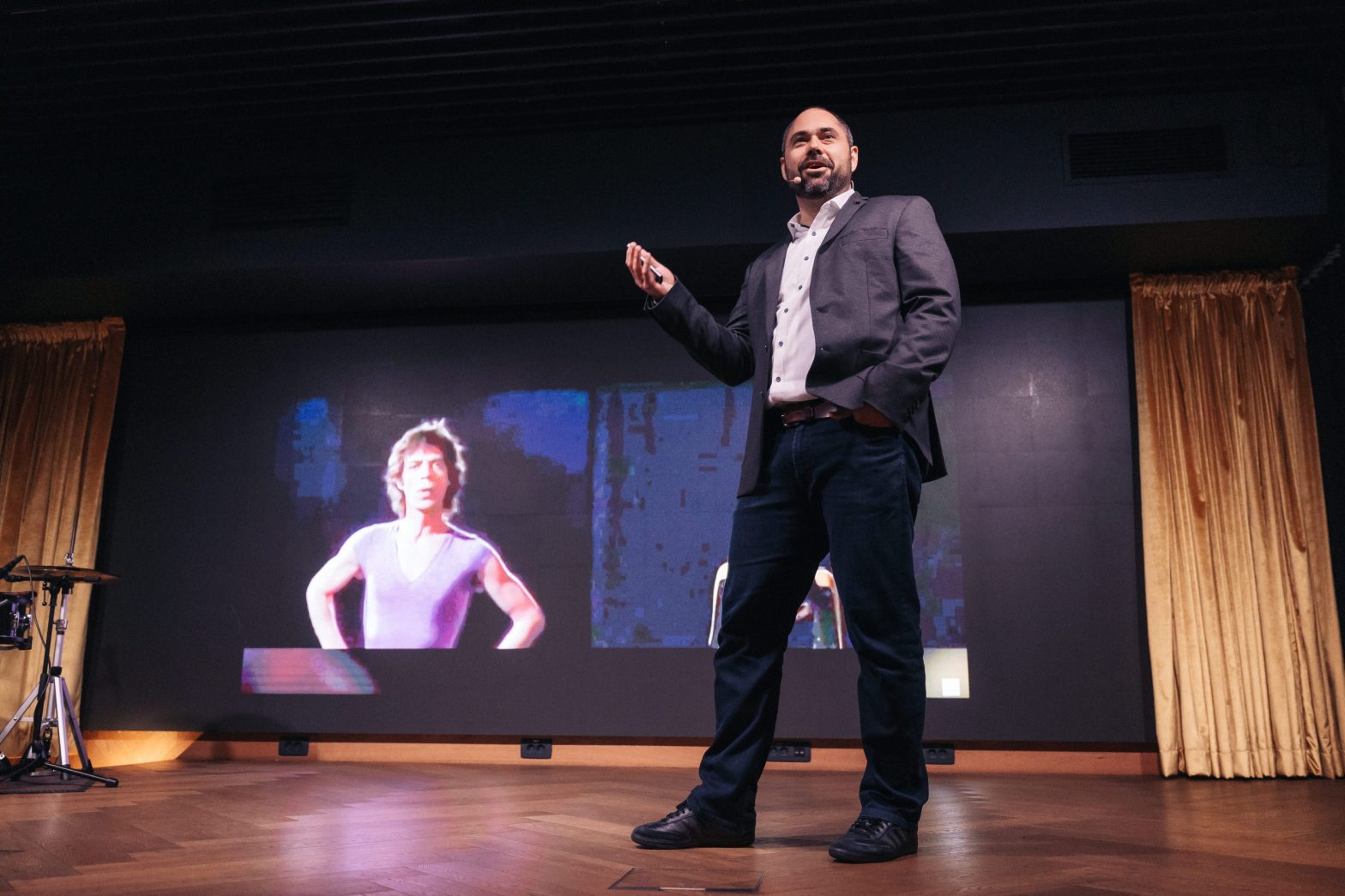
Interview with Vladimir Lukić, global technology and digitization expert, BCG Managing Director and Senior Partner
Translation based on the print version article published in Vecer.
Can technology help overcome the current economic crisis?
– A lot of changes are happening at the global level at the moment: geopolitically, we have a war in Ukraine and big questions about what is happening in China, all of which affect supply chains that are delayed. Technology and digitization are the only way to solve these problems. Another problem is that there are not enough workers. In Southeast Europe, the population is constantly falling, and governments are planning GDP growth of three to five per cent per year, which mathematically cannot be done without introducing technology and increasing people’s productivity. These trends are not only present in the region, 12 million jobs have been created in America and only four million can be filled. The third thing is that there are many technological solutions and companies are under constant attack of all these technologies, and they only manage contracts and public procurements instead of focusing on the real problems in business and how to use technologies to bring them added value.
Is it wise to slow down the investment in digitization that grew rapidly during the pandemic?
– At BCG, we conducted research on 2,500,000 companies in 14 countries, and one of the questions was how much they plan to spend on digitalization in 2023. Only three or four per cent said they would reduce costs, ten per cent would keep them at the same level, and more than 60 per cent will increase investment in digitization. If companies in the region start to reduce their investment in technology, they will not be competitive in the global market because no one is slowing down.
Sending a warning to entrepreneurs in the region not to slow down their investments in technology?
– Exactly. That’s one thing, the other is that in order for companies to realize benefits by introducing technology, they should focus on changing processes and people. Those that manage to activate workers and change the way they work, will succeed. Companies that manage to realize benefits from the implementation of technology invest a lot of time in optimizing the processes in which employees use data. For example, the data shows when a telecom client will stop doing so, depending on how often he uses the phone. But if employees don’t use that information, it’s useless.
Not every company has big data analysts.
– We can help companies to create the entire program and think about the operating model and not only about the implementation of technology. Many times there is a knowledge within the company, but there is no confidence to do something, so it is easier to let someone else do it. I will give you three numbers as an example: 10, 20, and 70 – when we look at the most successful companies and their projects with technology: ten per cent of all time and money was spent on a new algorithm and a new mathematical solution, twenty was spent on the technology of a new cloud system, and 70 per cent went to process changes and people education.
Do you create a technological development strategy for companies?
– It is about the pragmatic implementation of technology and internal process building so that people know how to filter, implement and use technology.
How did your career develop?
– In Osijek, I graduated from the classical gymnasium, which gave me the foundation for everything I did later. After that, I went to Jesuit University (exact name, please) in America and studied management information systems for four years. After my return, I did very interesting things at Gisdata in Zagreb. One of them was optimizing milk delivery routes for Lura when there was no Google Maps or navigation. Later, I completed an MBA at MIT, after which I came to BCG, where I worked on all topics within management for two years, and then started building our data analysis team, which now has two thousand engineers. While building this internally for BCG, I worked with clients on technology strategies, building their digital strategy and capabilities. One thing led to another, what I’m doing now I wasn’t doing five years ago, five years ago I wasn’t doing what I was doing five years before that… What we’re very good at as BCG and why I’m still here is that every two- in three years we have a completely new amount of knowledge and we evolve two or three years faster than the clients, and we can make money from it and help them.
How did you become a partner at BCG?
– I have been at BCG since 2006 and when I built the new teams that I have already mentioned, and in 2015 I became a partner. I am one of the younger partners, the youngest who runs a large business.
Where do you live?
– In Boston.
Would you have achieved all that if you were working from Croatia?
-I would not. I went to America because I wanted to learn something new. My wife is from Ljubljana, and I’m from Osijek, we went to see and learn something new. We are there at the source of a lot of things, especially technology. Everything new that comes from robotics and artificial intelligence is happening at MIT and Harvard. I’m at the source of all that as a kid in a chocolate shop and I get to play with all that stuff, and I have a platform at BCG where I can do that. Here the market is too small and the level of ambition is very different, the only question is how to do something of quality within Croatia or Slovenia. There is an ambition to achieve world domination in a certain category. I look at investments and the people I want to bring into the company completely differently. This is the reason why some of the things I do globally I could not do from here.
Has the growth bubble in the global tech scene deflated as big tech companies lay off employees en masse?
– They continue to grow, albeit at a slower pace. They employed too many people, they took talents from the market so that they would not be grabbed by the competition, and they would suddenly hire two or three thousand engineers just to remove them from the market. With big numbers and profits, they could reflect that, but after several quarters of declining revenue, there were layoffs. I would say that it’s a perfectly normal normalization, although a lot of people say it’s a big problem. They will start startups with the severance pay they receive so that in two or three years there will be very interesting companies from Silicon Valley because the unused talents are now starting new things.
Should we still invest more cautiously in the IT sector?
– Yes, but depending on the industry, depending on what creates added value, a technological strategy should be made around it. Technology for the sake of technology is a waste of money that makes no sense. Every company must be able to articulate what are the two or three points that will be the added value that technology will bring them, but too few companies know that.
Is there, for example, a danger that the growth of Infobip will slow down and what could threaten its position on the market?
-Infobip is a fantastic story and company, they are the exception that proves the rule. Their ambition is global and that automatically forced them. The moves they make are completely different because of such ambition. I think they will have no problem doing it technologically because they have the capacity and knowledge, and they can get the money. What they have to pay attention to are things they are not used to in this climate. Their website states that there is only one woman in management and the rest are all white men. If they want to do an IPO in America, they won’t get money because big funds have different criteria, and it will depend a lot on the quality of their advisors. Another problem is that one of the big players could very easily invest five billion dollars and do something similar, which would give Infobip the competition it did not expect.
Who are your clients globally and what do you advise them?
– The smallest client has a billion dollars of revenue per year, and usually, there are clients from five to ten billion or more. These are companies that have technology departments and have spent a lot of money on technology. They have a high cost, and they have no control over how it helps them in specific processes and creates added value, which is why they depend on vendors. A lot of times we bring them back to the basic principles of running a company to articulate what they do and how they make money so we can talk specifically about which of the technology components help achieve any of those goals. Often they just focus on optimizing technology or cost or how to bring new things, and no one thinks about how to learn new things and grow in new areas. Some of our clients are Pepsi, Starbucks, Pfizer, Human, and CVC in America. In the region, we work for most of the larger companies. If you take any industry and the top five companies in it, we probably work for three of them. I personally work very hard for the US Post Office which has 70 billion dollars in revenue so I say I’m fighting against Uber and Amazon…
What is the added value that you provide to clients in Croatia, considering the knowledge and experience you have on a global level?
– I personally do not work with clients in the region, I am focused on clients in America. We have teams from Ljubljana, Zagreb, Belgrade and Budapest that do this. When they need me, they call me. We’ve had conversations with some other companies, and the reason I’m here today is the opportunity to change their ambitions and help them incorporate digital and technological ambitions into their strategies.
What strategy do Croatian entrepreneurs need to be competitive in the world market?
– Dramatically different answers from sector to sector. The only thing I can generalize about is an absolute focus on a specific thing. A lot of companies from smaller markets get into trouble because they want to do everything for everyone. This dilutes resources, capital and focus, so they are irrelevant in any market. I had a client from the region who tried to enter the US market. They did pilot projects in six stores, the product went great and the customer in America asked for ten times the quantity for ten thousand stores for the whole of America. But that company could only do it for ten stores and it took them three years to build a factory where they could produce the required amount of goods for all the other stores. Then the big retailer built its factories in America and manufactures that product itself. For our companies, if they want to be in the global market, focus and articulation and awareness of where you want to play are very important. Such a situation is not only with IT but with all other companies.
What do you think about the potential of Croatian IT?
– There is no such technology and idea that I shared that they have not heard of here in the technology sector. There is no shortage of technical knowledge and energy to do something because we have quality schools.
Do you share the opinion of some investors that the value of Croatian and in general startups from Southeast Europe is overestimated?
– I haven’t seen enough of them to be able to comment on whether this is true. There are our people out there who work in large funds and sometimes emotionally want to invest and pay more just to help our companies enter the foreign market.
Do you think it would be wiser to invest in IT in Croatia than in tourism because the season lasts only three months?
– This is where we can enter into philosophical discussions. We have a gem that we can make something of, it would be a shame to ignore it. I personally think that we are not using it in the best and most sustainable way. I believe there is potential for the manufacturing industry, we have the capacity and knowledge, especially around robotics. The key thing is to clearly define who the customers are, where to focus production and process, and on the end customers. If we don’t do that, we’ll just become outsourcing to Microsoft, Intel… We lack user control, and that’s what Infobip did, they articulated the solution and focused on the market. While someone is only a partner of a larger company, he cannot get all the benefits in that area.
In Croatia, they are constantly waiting for foreign investors as if they will solve all the problems. How smart is that?
– The worst thing is to wait and not have an articulation of ambition where we want to go. Without it, we have no compass. I’m sorry for some missed opportunities. When some large global companies come to Europe to do something, they go to Poland and the Czech Republic because they have a prepared infrastructure. I was in Singapore a couple of weeks ago and we are working with the government to train their workforce, thirty thousand of their civil servants go through our program every six months. We are also building engineering capacities for Singapore, in case Pfizer or Siemens come and want to open a fully automated factory for the production of specific components there, the state guarantees them that within ten days they will have a factory with ten thousand workers fully ready to do the work and access to their ports that are optimized. The state designed this, it is not waiting for someone to come to them as an investor. I’m not here to be able to comment on whether we have the competence and infrastructure to do it here, but the worst thing is to wait.
On what potentials would you base Croatia’s economic strategy?
– I would focus on production and export, but not on the export of raw materials but on the finished product. I believe that there is room for doing things right in the food industry because there is a lot of potential in food production and export to large markets. The second is the encouragement of IT and the creation of technologies, but not only as outsourcing for others but as a product for the foreign market. Končar and some other companies for the production of component robotics should be used. The demand for such things is high, and clients want to have a manufacturer in Europe and not in Asia. These are just some examples… Investments can be reached quickly if something is done. Sports would be the last suggestion; sports medicine and training. I work with a coach from Croatia because I can’t get that quality in America. The results of our athletes are fantastic, and various academies, sports camps and sports medicine should be established, which will entail the production of sports equipment. The whole country can be connected like that.
 BCG BUD Alumni